23 December 2025
June Chua, Head of Asia Equities

Asia equities ex-Japan delivered strong performance in 2025. Looking ahead to 2026, June Chua, Head of Asia Equities, outlines in this investment note why she believes the outlook for the asset class remains constructive, underpinned by numerous positive catalysts: a softer US dollar, the US Federal Reserve’s rate-cut trajectory, supportive earnings and valuations, and differentiated growth drivers across geographies.
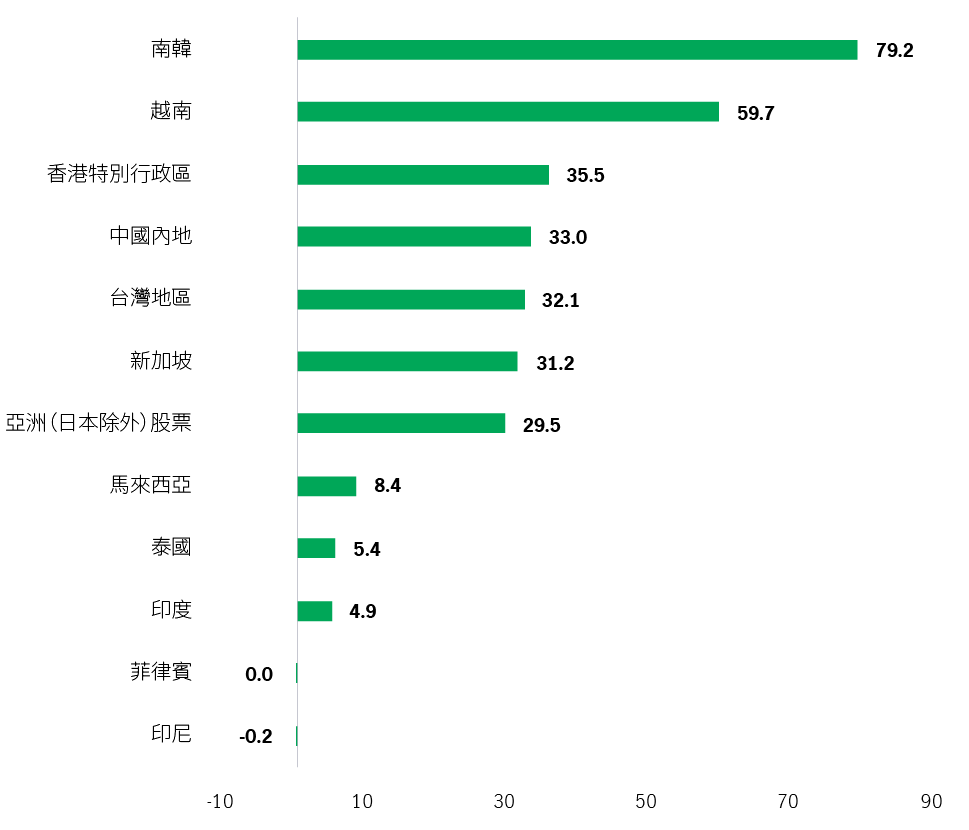
Despite trade-related volatility in the first half of 2025, Asia equities have delivered strong year-to-date (YTD) returns, rising by 29.5% (Chart 1)1. The performance was driven by a weaker US dollar, easing trade tensions, optimism around artificial intelligence (AI) and technology, and the US Federal Reserve (Fed) rate-cut path.
Chart 1: 2025 YTD MSCI Asia indices performance (USD, %)2

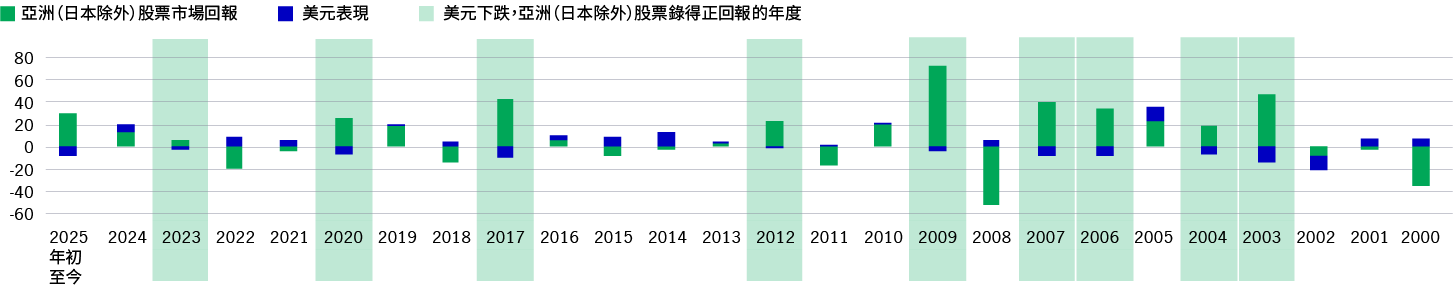
Overall, there have been 10 years in which the US dollar’s performance has been negative (Chart 2). Of these 10 years, we have seen positive performance from Asia ex-Japan equities in nine of them. The global macro backdrop of lower US rates could result in a weaker US dollar, which has historically been a positive for Asian equities.
Chart 2: Asia equities market performance versus US dollar performance3

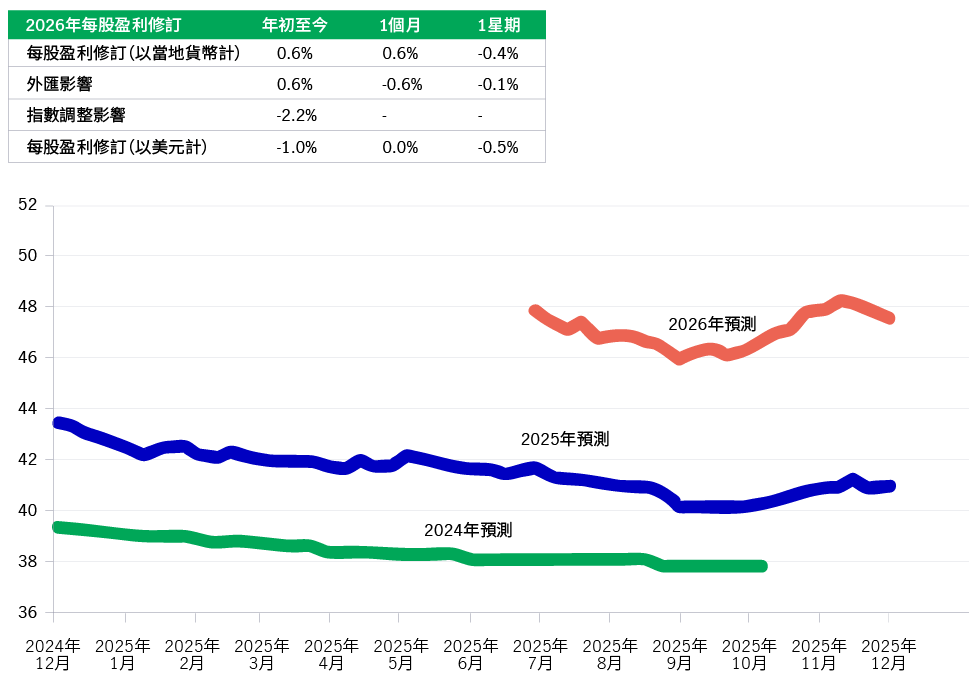
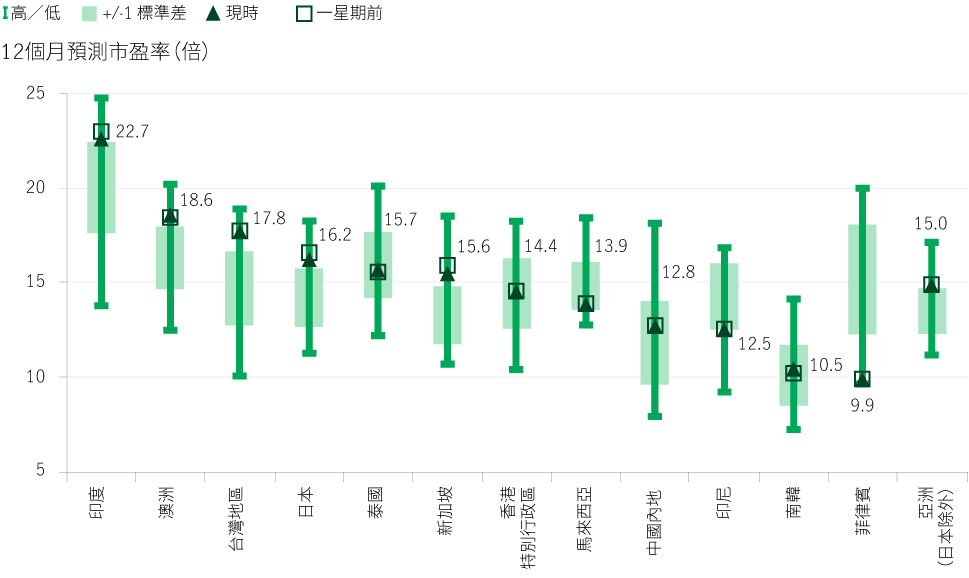
Apart from overall US dollar weakness, Asian markets' earnings and valuations remain supportive, with a positive outlook overall (Chart 3 and 4).
Chart 3: Consensus earnings per share (EPS) levels of the MSCI AC Asia Pacific ex-Japan Index (USD)4

Chart 4: Asia equities forward price-earnings (P/E) valuations (current vs 10-year average)5

Asian earnings estimates for 2026 were revised down for most of the year, but we witnessed an inflexion point in the fourth quarter, driven by Korea, Taiwan, and Hong Kong on the back of strength in technology.
Each Asian geography will feature different growth drivers in 2026, which we will explore.
From a macroeconomic perspective, we believe the Greater China economy has multiple avenues for growth, driven by the 15th Five-Year Plan (2026-2030). We reiterate our positive view of Greater China equity markets heading into 2026, supported by attractive valuations and resilient fund flows.
With tariff noises subsiding, we believe there are more varied investment opportunities in Greater China, notably in (1) technology, (2) industrials, (3) renewable energy, (4) healthcare and (5) new/niche/experienced consumption.
For the Taiwan region, we continue to see solid emerging structural growth opportunities in (1) foundries, (2) outsourced semiconductor assembly and test (OSAT) supply chain, (3) thermal cooling solutions and (4) power supply solutions.
For more in-depth analysis, please see our 2026 Greater China Equities Outlook.
While delivering positive absolute returns over the past year, India has underperformed the rest of Asia due to the recent escalation in trade tensions with the US, which has raised concerns over India’s economic outlook and the subsequent impact on India’s fiscal and current accounts and its currency, the Indian rupee (INR).
When seen in isolation, if the current tariff rates continue, there are 60-100 basis points (bps) of downside risk to gross domestic product (GDP) growth, assuming a 50-80% hit to the affected export basket.
The current account deficit (CAD), previously projected at 0.5% of GDP, could widen to 1.1%-1.5% depending on the severity of export losses. Currency depreciation pressures may also emerge, although India’s robust foreign exchange (FX) reserves and credible macro framework should contain INR volatility.6
However, we have also seen responses from India’s policymakers, both on the fiscal and monetary sides, and these measures could largely offset the drag from the increased tariffs. These include a reform of the Goods and Services Tax system, the Union Budget’s direct tax relief, and the Reserve Bank of India’s cumulative rate cuts of 125 bps in 2025.
Overall, the potential cost of this policy stimulus is affordable given discipline in India’s fiscal balances, inflation and external accounts. If the 50% tariff is rolled back to 25% or further reset lower to a range of 15-20% (in line with other Asian economies) amid ongoing negotiations, this would be a notable positive for India’s economic and earnings growth.
We continue to stay true to our 5D structural investment themes – Digitization, Demographics, Deglobalization, Decarbonization, and Deficit Reduction – that capture the multi-dimensional nature of India’s economic transformation.
Asia ex-Japan equities have been driven by the strong performance of the Korean market in 2025.
This is on the back of AI-related plays. AI data centres have sparked new growth across the information technology (IT) and industrial sectors, and we assess the magnitude of this structural shift to be substantial.
The reason for our positive view is that the surging demand for AI data centres creates two major bottlenecks: memory and electricity. Generative AI architecture requires massive concurrent memory usage for computation.
However, expanding memory production capacity is rigid. It involves significant capital expenditure (hard assets) and long lead times: over two years to build and equip facilities, nine months for chip fabrication, and an additional three months for server integration.
The situation is similar for power. Data centre power consumption, currently at 1% of the total system, is projected to reach 10% within five years. However, power generation and transmission capacities face absolute temporal and physical constraints regarding expansion.
In addition to technological developments, a consensus is emerging in Korean society on the necessity of a new era of shareholder capitalism.
While the previous administration focused on banks and state-owned enterprises (SOEs) – sectors easily influenced by government policy – to drive governance reform and dividend increases, the current administration has begun to challenge the chaebols directly.
Measures include reforming the Commercial Code to restructure board authority and penalising companies that fail to cancel treasury shares. Ultimately, these steps will strengthen shareholder capitalism in Korea, creating significant potential for the re-rating of price-to-book (P/B) multiples that have long been discounted.
We maintain a high level of conviction in Korea’s broader industrial sector. While our exposure to power equipment has historically centred on transformers, we anticipate significant opportunities in power generation itself and are expanding our investments accordingly.
Notably, Korea is arguably the only nation with mass-production capabilities for hydrogen fuel cells and remains a strong exporter of nuclear power technology.
Our industrial thesis also encompasses the shipbuilding and defence sectors, where Korean companies hold an oligopolistic global position. With demand rising due to geopolitical tensions and conflict, we are conducting extensive deep-dive research across these hard industrial verticals.
The consumer goods sector also offers compelling opportunities.
First, the surging global demand for Korean cultural content, such as TV dramas and K-pop, is creating a direct positive spillover effect for the Korean food and cosmetics industries. Furthermore, in the automotive space, consumer preference is shifting from engine performance to passenger convenience and electronic integration—areas where Korean manufacturers have developed a competitive edge.
We project that the US market, specifically, will likely remain a vital profit driver for Korean automakers as they continue to expand market share in an environment free of competition from their Chinese Mainland peers.
Year-to-date, equities in most ASEAN markets have underperformed their North Asian peers.
Investment sentiment has been weighed down by a weakening earnings growth outlook, political uncertainties in Indonesia, Thailand and the Philippines, and lingering global trade policy risks.
Additionally, rising competition from Chinese mainland companies entering various ASEAN sectors has pressured the earnings of some local firms. Export-oriented corporates are holding back on capacity expansion amid uncertainty over the potential impact of President Trump’s tariffs.
Despite the challenging environment, we believe coordinated efforts by governments, central banks and corporates are underway to navigate these headwinds.
Individual ASEAN markets have different evolving drivers: Singapore’s Equity Market Development Programme (EQDP) is unlocking value among under-researched companies; Indonesia’s political noise could be behind us, with consumption expected to bounce back; Malaysia continues to benefit from data centre build-out; and Thailand remains supported by domestic and tourism recoveries. Lastly, the situation in the Philippines is like that in Indonesia, where political noise should be behind us, and consumption growth will pick up again.
A favourable macroeconomic backdrop, structural growth themes, and compelling valuations anchor the investment case for Asia ex-Japan equities in 2026. While regional divergences persist, such as India’s trade-related headwinds and ASEAN’s political uncertainties, opportunity sets exist, particularly in the technology, industrials, and consumer sectors.
The investment team remains highly disciplined with its stock-selection process, focusing on businesses with robust financial positions and sustainable long-term growth prospects. With improving global macroeconomic conditions and recovering domestic earnings, we believe Asia ex-Japan equities remain a critical component in a long-term investment portfolio.
1 Bloomberg, as of 30 November, 2025.
2 Source: Bloomberg, as of 30 November, 2025. The performance of individual markets is represented by their respective MSCI indices.
3 Source: Bloomberg, as of 30 November, 2025. The Asia ex-Japan equity market return is represented by the MSCI AC Asia ex-Japan Index. US dollar performance is represented by the US dollar Index (DXY).
4 Source: FactSet, I/B/E/S, MSCI, Goldman Sachs Global Investment Research, as of 6 December, 2025.
5 Source: FactSet, I/B/E/S, MSCI, Goldman Sachs Global Investment Research, as of 6 December, 2025.
6 Source: Manulife Investment Management’s estimates, 30 November, 2025.
2026年環球宏觀經濟展望:前景趨明朗,增長見改善
我們在2026年宏觀經濟展望中,將重點闡述環球經濟及商品的關鍵主題,在新一年將密切關注的焦點,以及投資者可作為參考的投資組合要點。
亞洲固定收益市場是否處於轉捩點?
本期2025年下半年投資展望分析推動亞洲固定收益市場回報的短期利好因素,以及長遠可望支持這項資產類別的結構性基本因素和地緣政治變化的趨勢。
2025年下半年環球宏觀展望:新變局與舊格局
政府的政策決定較預期強硬(尤其是美國),迅速改變了我們在2025年初的部份觀點。舉例如美國經濟增長仍較其他地區強勁,但與全球其他主要經濟體的差距似乎正逐漸收窄;反觀歐元區經濟目前則受惠於一些結構性利好因素。儘管環球央行邁向中性政策利率的趨勢大致仍然未變,但我們原先預期利率明顯趨於一致的情況並無出現。
2026年環球宏觀經濟展望:前景趨明朗,增長見改善
我們在2026年宏觀經濟展望中,將重點闡述環球經濟及商品的關鍵主題,在新一年將密切關注的焦點,以及投資者可作為參考的投資組合要點。
亞洲固定收益市場是否處於轉捩點?
本期2025年下半年投資展望分析推動亞洲固定收益市場回報的短期利好因素,以及長遠可望支持這項資產類別的結構性基本因素和地緣政治變化的趨勢。
2025年下半年環球宏觀展望:新變局與舊格局
政府的政策決定較預期強硬(尤其是美國),迅速改變了我們在2025年初的部份觀點。舉例如美國經濟增長仍較其他地區強勁,但與全球其他主要經濟體的差距似乎正逐漸收窄;反觀歐元區經濟目前則受惠於一些結構性利好因素。儘管環球央行邁向中性政策利率的趨勢大致仍然未變,但我們原先預期利率明顯趨於一致的情況並無出現。