
22 October 2026
As U.S. midterm elections approach in November, louder headlines may tempt some investors to wait on the sidelines. We believe history offers some useful context for understanding market behaviour around election cycles. Here is what decades of election-cycle data may tell us, and why patience has often mattered.
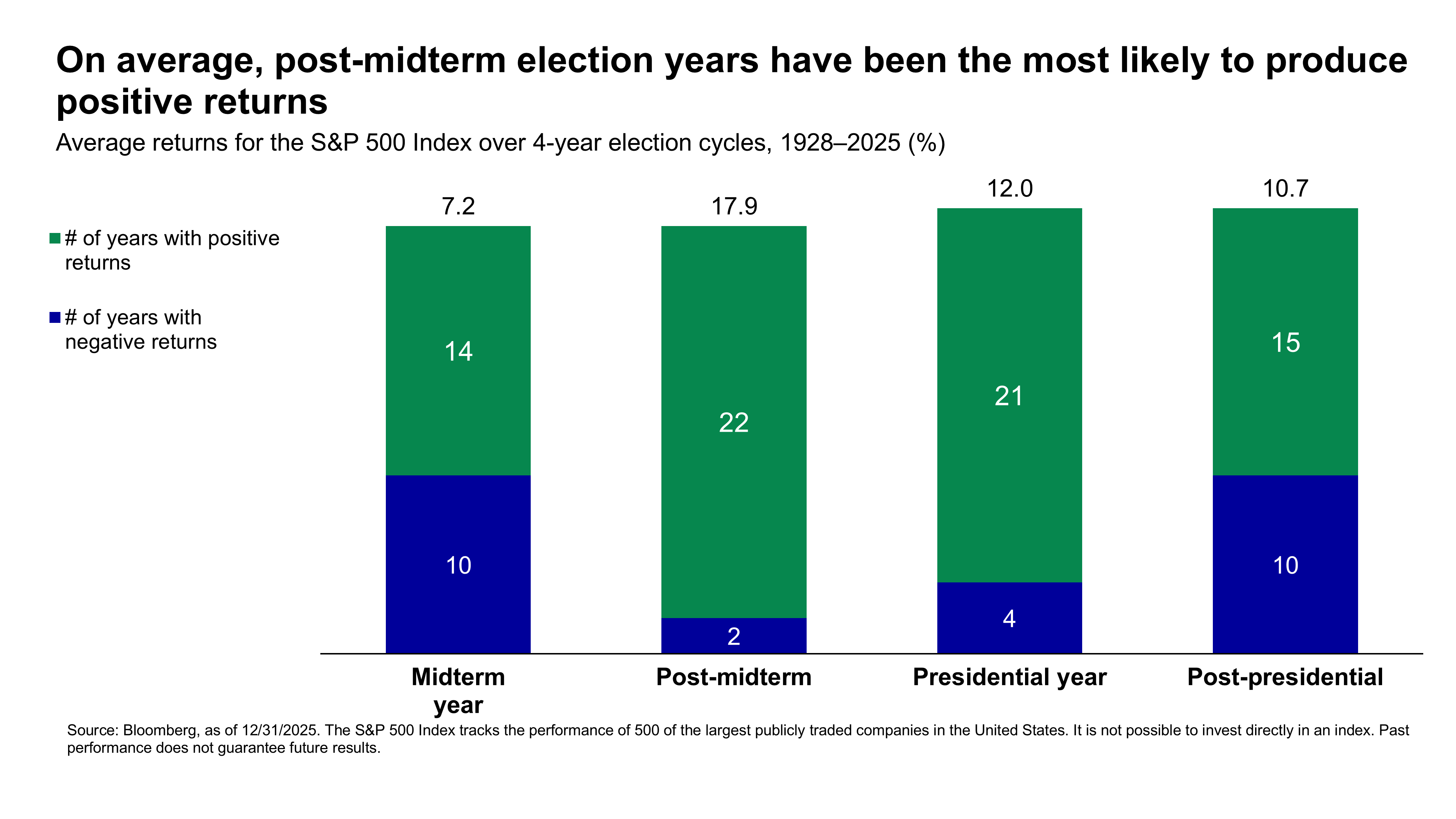
Heated election campaigns can leave investors feeling uneasy about the country and the markets. Yet since 1928, the S&P 500 has historically performed best in the year after midterm elections. Midterm years themselves have been more mixed, averaging 7.2% with 14 positive and 10 negative years. One possible reason for the post-midterm strength is that campaign promises may buoy corporate earnings. In our view, election-related concerns alone may not justify changing a long-term investment approach.
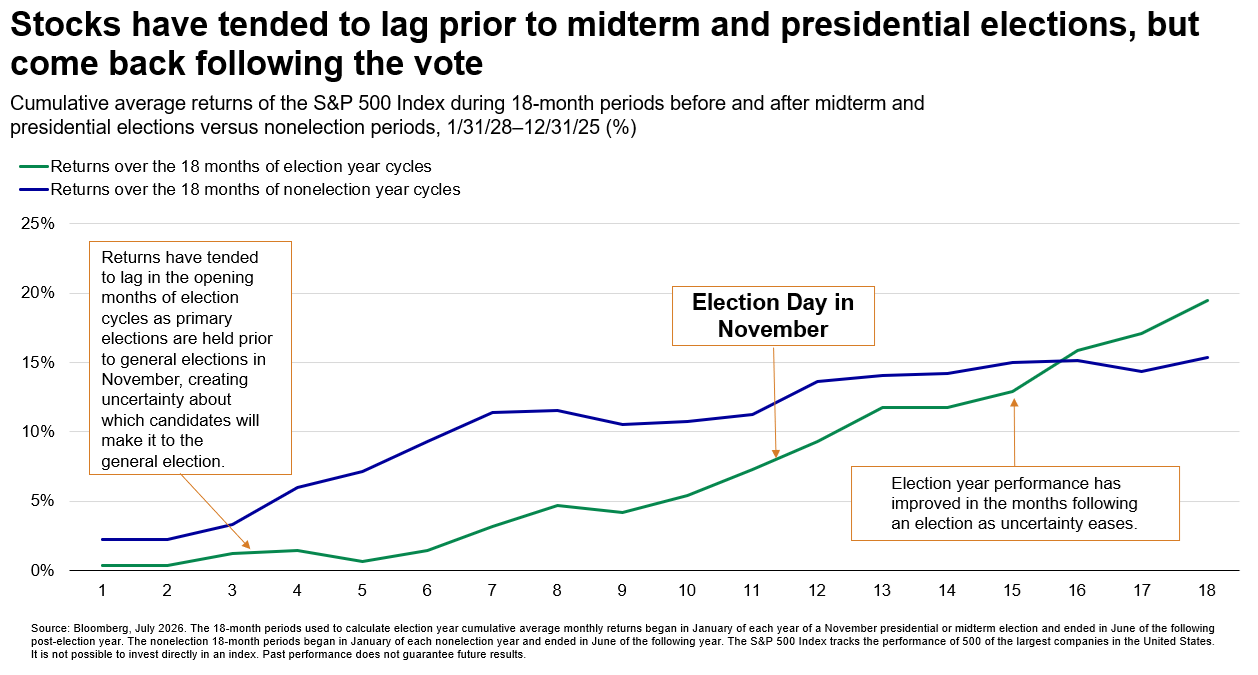
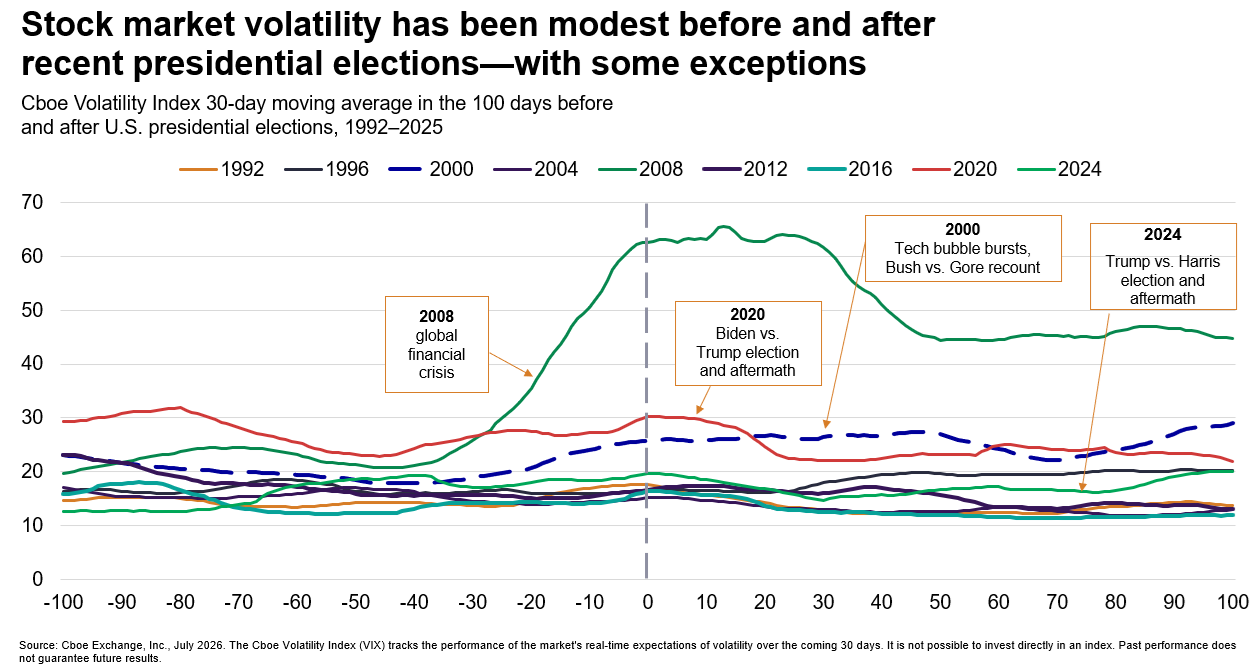
Stocks have tended to lag in the months before elections, when primaries create uncertainty about candidates. On average, election-period returns trailed non-election periods until after the vote, then moved ahead, reaching 19.5% versus 15.4% by month 18. Volatility has also been modest around most recent presidential elections, with exceptions in 2000, 2008 and 2020. Investors who step aside during uncertain months may miss the recovery that has often followed.
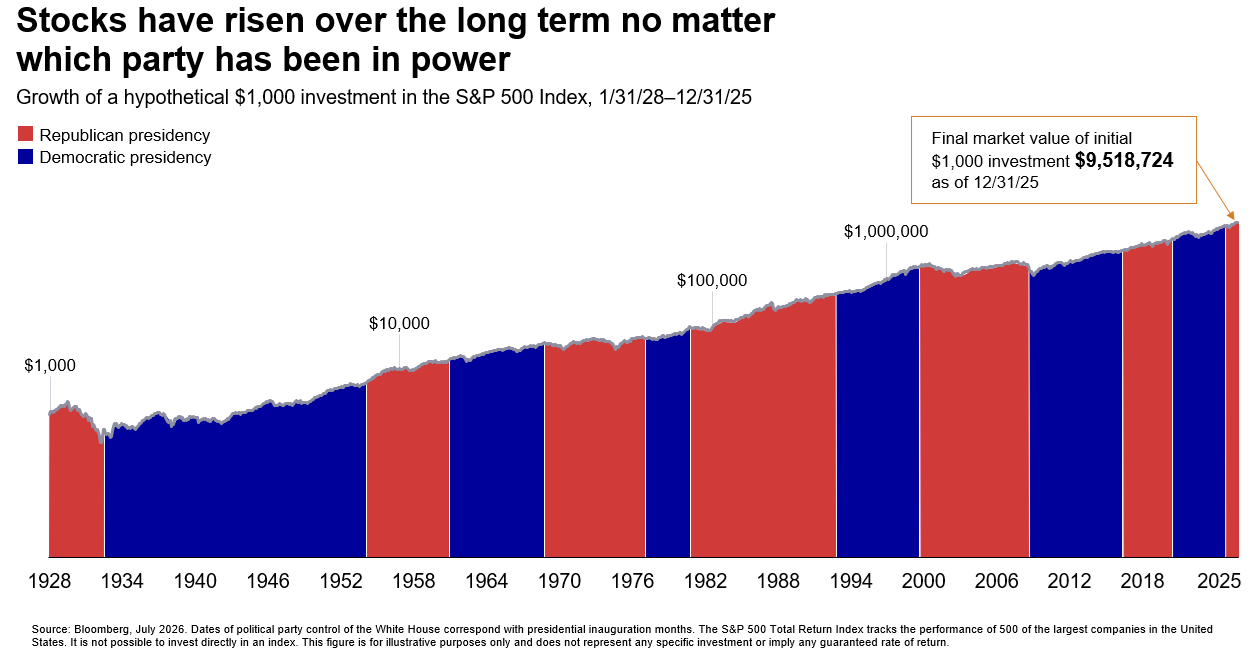
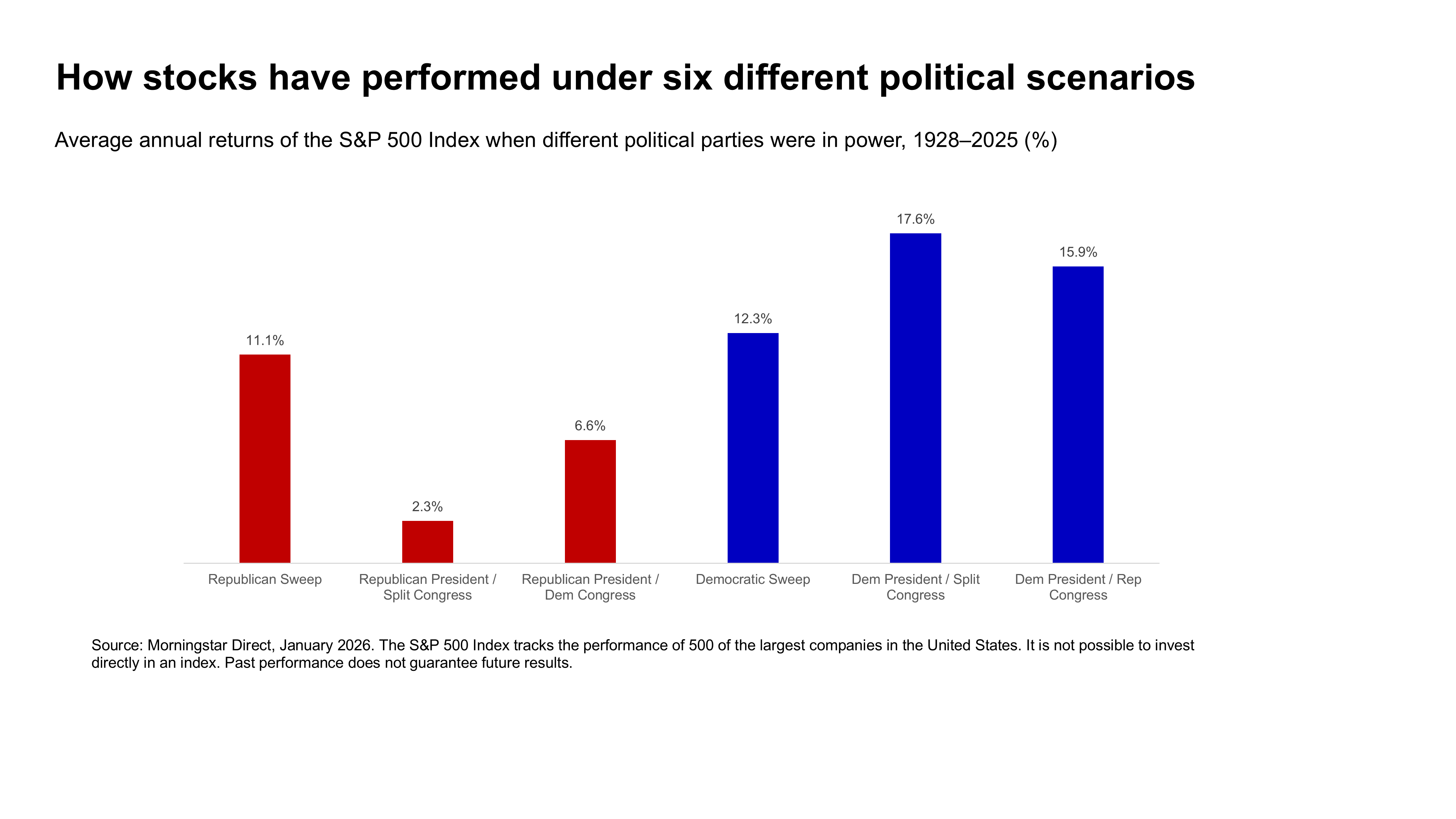
We believe the bigger lesson is that stocks have risen over the long term regardless of which party held the White House. A hypothetical US$1,000 invested in the S&P 500 in 1928 would have grown to about US$9.5 million by the end of 2025, despite wars, recessions and market shocks. Across six combinations of White House and Congress control, average annual S&P 500 returns since 1928 were positive in every case, ranging from 2.3% to 17.6%.
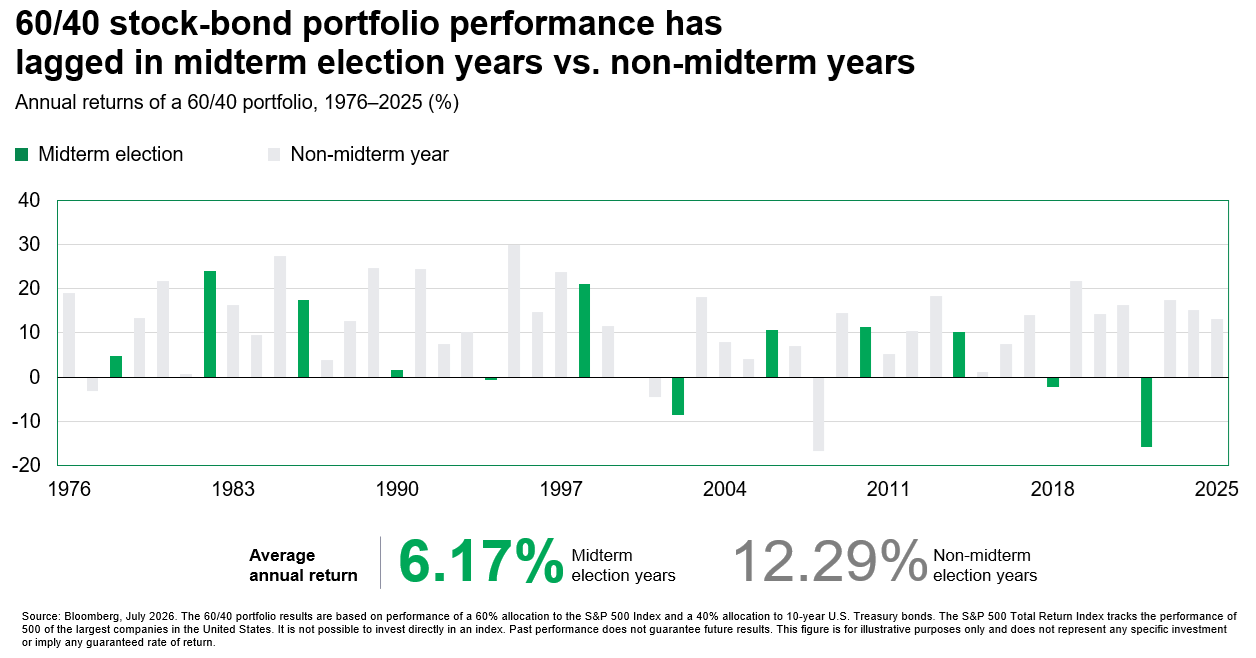
Short-term periods can disappoint. A 60/40 stock-bond portfolio averaged 6.17% in midterm years versus 12.29% in other years between 1976 and 2025. Still, markets have historically recovered from crises, and investors who stayed invested through difficult periods may have been rewarded in the long term.
We believe a diversified portfolio that suits investors’ goals and risk tolerance, and a long-term view, may help investors look past the election noise. Every election cycle is different, but we believe the lesson from history is consistent: focus on the long term rather than the headlines.
Implications of US midterm elections on Asian equities
While selected markets and sectors may see near-term volatility as investors assess the implications for fiscal policy, trade, regulation and US Treasury yields, the overall impact on Asian equities may be limited. More importantly, domestic growth drivers, policy priorities and company fundamentals are likely to remain the key drivers of the region’s equity markets.
Manulife Global Multi-Asset Diversified Income (GMADI) Fund: Navigating the selloff
The strategy has not been immune to the recent equity sell-off, particularly given its selected exposure to semiconductor and AI-infrastructure themes. Looking ahead, the emphasis remains on diversification, income generation and disciplined security selection.
Asian Fixed Income: Navigating the selloff
We remain constructive on Asia fixed income despite recent market volatility. We see a few potential medium-term catalysts, including stronger foreign investment flows into select Asian economies and a more benign inflation backdrop.
Implications of US midterm elections on Asian equities
While selected markets and sectors may see near-term volatility as investors assess the implications for fiscal policy, trade, regulation and US Treasury yields, the overall impact on Asian equities may be limited. More importantly, domestic growth drivers, policy priorities and company fundamentals are likely to remain the key drivers of the region’s equity markets.
Manulife Global Multi-Asset Diversified Income (GMADI) Fund: Navigating the selloff
The strategy has not been immune to the recent equity sell-off, particularly given its selected exposure to semiconductor and AI-infrastructure themes. Looking ahead, the emphasis remains on diversification, income generation and disciplined security selection.
Asian Fixed Income: Navigating the selloff
We remain constructive on Asia fixed income despite recent market volatility. We see a few potential medium-term catalysts, including stronger foreign investment flows into select Asian economies and a more benign inflation backdrop.

©1999 - 2026 Manulife Investment Management (Hong Kong) Limited


